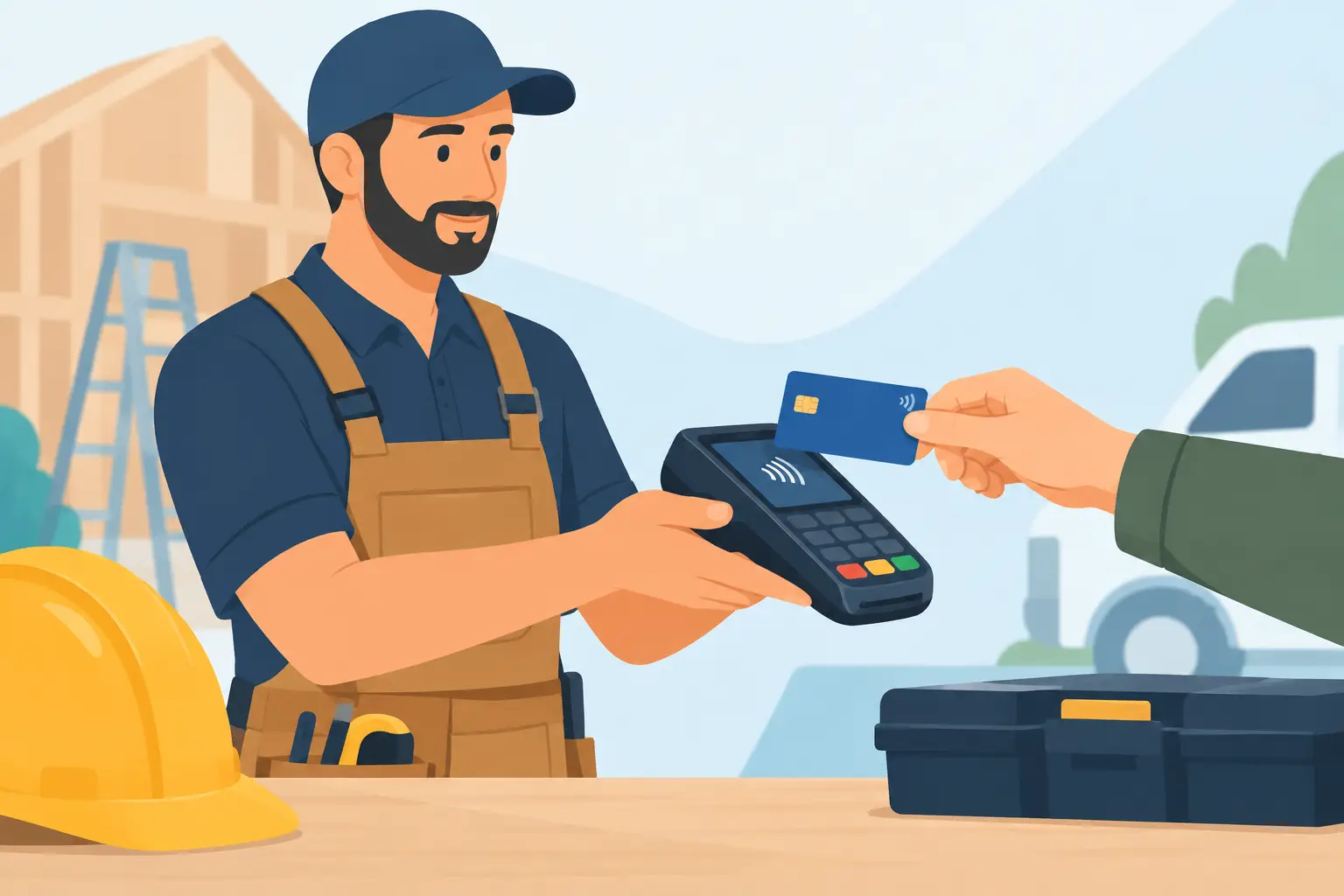
A customer approves a $9,500 HVAC replacement, then asks, “Can I put that on a card?” If you cannot take the payment, you may lose the job, wait on a check, or spend days chasing a bank transfer. So, can contractors accept card payments? Yes. For many trade businesses, accepting cards is a practical way to close work faster and improve cash flow.
The real question is not whether you can accept cards. It is how to offer them without letting processing fees quietly cut into already-tight job margins. The right process starts when you build the quote, not when the invoice becomes overdue.
Can Contractors Accept Card Payments Legally?
In most cases, contractors can accept credit and debit card payments just like any other business. You need a business bank account, a payment processor or merchant services provider, and a way to send customers a secure payment request or take payment in person.
Card payments are common for service calls, deposits, progress payments, change orders, and final invoices. Homeowners often prefer them because they are fast, familiar, and may offer rewards or financing flexibility. Commercial customers may use cards for smaller repairs and maintenance work, although larger projects are more likely to be paid by check or ACH.
There are a few rules to handle carefully. Never write down or store card numbers in notes, texts, or job files. Use a secure processor that handles card data properly. If you plan to pass processing costs to customers through a surcharge, check your state rules and card network requirements first. Surcharging is not allowed everywhere, and the disclosure requirements can be specific.
A cash discount can be another option, but it also needs to be presented clearly. Before adding any fee or discount policy, confirm the requirements that apply to your business with your payment provider and a qualified local advisor.
Why Card Payments Matter for Trade Contractors
A card option removes friction at the point when a customer is ready to say yes. That matters most on residential work, where the person approving the project is often standing in front of you. A professional quote, clear deposit request, and simple payment option make it easier to move from approval to scheduled work.
Cards can also shorten the gap between finishing a job and having usable cash in your account. A paper invoice may sit on a kitchen counter or in an accounts payable queue for weeks. A digital invoice with a pay-now option gives the customer a direct next step. You still need clear payment terms, but you are no longer relying on someone to find a checkbook, mail payment, or call the office.
There is also a professionalism factor. Customers expect established contractors to offer more than one way to pay. That does not mean every job should go on a card. It means your business can meet customers where it makes financial sense.
Understand the Cost Before You Offer Cards
Card processing is not free. Fees commonly include a percentage of the transaction plus a small fixed amount. The exact rate depends on the provider, card type, whether the card is entered manually or paid through a secure invoice, and other factors.
On a small repair, the fee may be easy to absorb because getting paid immediately is worth more than spending time on collections. On a major remodel or a large equipment install, the same percentage can become a meaningful dollar amount. A 3% fee on a $20,000 payment is $600. If your estimate did not account for it, that money comes directly from your margin.
That is why payment decisions belong in your pricing process. Know your labor, material, equipment, overhead, and target profit before you send the quote. If you decide to absorb card fees, build that reality into the pricing model across your business rather than making a rushed decision after the customer approves.
Do not assume you should raise every quote by the full card fee. Many customers will pay by check, ACH, or another lower-cost method. Your best approach depends on your average job size, customer mix, payment habits, and local rules. The goal is to protect margin while making payment easy.
Build Card Payments Into the Job Workflow
The strongest payment process is simple for your customer and controlled for your team. Start with a detailed quote that shows the scope, price, exclusions, and payment schedule. If the job requires a deposit, state the amount and when it is due before scheduling begins.
Once the customer approves, send the deposit request immediately. Do not wait until the day before the work starts. A paid deposit confirms commitment, supports material purchases, and gives your schedule more certainty.
For longer projects, use milestone billing tied to real work completed. For example, a remodel may require a deposit, a payment after rough-in, and a final payment at completion. This keeps your cash flow closer to your costs instead of forcing you to finance the entire project until the end.
When the work is complete, send the final invoice while the value of the job is still fresh. Make it clear what has been paid, what remains due, and the due date. If a customer chooses to pay by card, the payment should be easy to complete from the invoice without calling your office to read out card details.
This is where connected contractor software makes a difference. With QuoTrak, you can create a professional quote, track margins while pricing the job, convert an approved quote into an invoice with one click, and move the customer toward payment without rebuilding paperwork. Less retyping means fewer errors and less delay between approval, billing, and cash collection.
When Cards Are the Right Choice and When They Are Not
Cards are especially useful for emergency calls, service work, maintenance agreements, deposits, and final balances on residential jobs. These are situations where speed and customer convenience can outweigh the processing cost. They can also reduce awkward collection conversations because payment happens as part of the normal closeout process.
For high-dollar projects, consider giving customers a choice. You may accept a card for the deposit or a portion of the balance while offering ACH or check for larger payments. Explain the available methods before the invoice is due, not after the customer has already assumed they can use a card for the full amount.
Commercial work often requires a different approach. General contractors and property managers may have established accounts payable procedures, lien waiver requirements, or payment terms that cards do not solve. Even then, a card option can be useful for smaller change orders, after-hours service calls, or customers who need an immediate payment method.
The point is not to force every customer into one payment type. It is to create a policy your office can follow consistently and that keeps your margins visible.
Avoid the Common Payment Mistakes
The biggest mistake is treating card fees as an afterthought. If you do not know the job margin before you accept payment, you cannot tell whether a card transaction turns a good job into a weak one.
Another mistake is invoicing too late. Contractors often finish the work, clean up, move to the next job, and promise themselves they will bill later. That delay turns completed work into an accounts receivable problem. Send the invoice as soon as the billing milestone is reached.
Finally, do not make customers guess how to pay. Put payment terms in the quote, repeat them on the invoice, and give your team a standard answer when customers ask about cards, checks, deposits, or financing. Clear expectations reduce disputes and speed up decisions.
Card payments are not just a convenience feature. Used with the right pricing and billing process, they help you collect deposits sooner, reduce payment delays, and give customers an easier way to approve and pay for necessary work. Keep the workflow tight: price for profit, invoice without delay, and make it simple for a ready customer to pay.